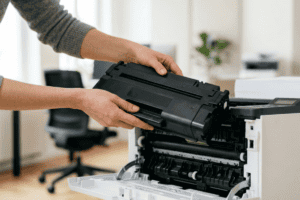
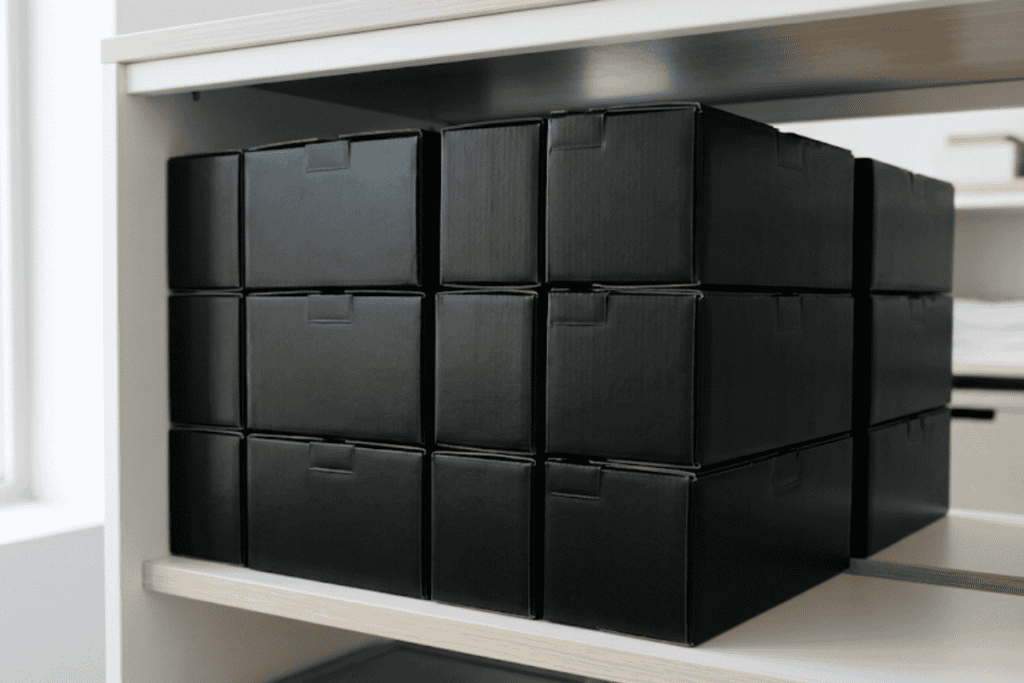
A question we hear all the time from offices around Broken Arrow and Tulsa is simple: does printer toner expire if you don’t use it? If you have a spare cartridge sitting in a supply closet, it is a fair thing to wonder, especially when you notice a printed date on the box. The short version is reassuring. Sealed toner is remarkably stable, and a cartridge you bought a year or two ago is very likely still good. The longer version, which we will cover here, explains why that is true, how storage affects the answer, and how to tell if a cartridge really has gone past its prime.
Does Printer Toner Expire If You Don’t Use It? The Short Answer
Toner does not spoil the way milk does. Unlike liquid inkjet ink, which can dry out and clog, laser toner is a dry powder, so it does not evaporate or harden on its own. Manufacturers often print a best-by date on the box, usually around two years from the date of manufacture, but that date is a conservative guideline rather than a hard cutoff. In fact, sealed original cartridges frequently work well long after that date. An HP LaserJet engineer noted in a manufacturer forum that genuine toner shows no meaningful degradation over many years of sealed storage, which speaks to how durable the powder really is. You can see that discussion of toner shelf life for the technical reasoning.
What Toner Is Actually Made Of
To understand why toner lasts so long, it helps to know what is inside the cartridge. Toner is not a liquid at all. It is a finely milled powder made mostly of plastic resin blended with pigment, wax, and charge-control additives, and the process it feeds is called composition of an electrophotographic image. Materials analysis shows the individual particles are typically only about 8 to 10 microns across, which is finer than flour, and are built from carbon and polymer, as documented in this materials science look at toner powder. Because these ingredients are solid and chemically stable, they simply do not break down while sealed away from air, light, and moisture.
How To Store Toner So It Lasts
Storage is where you actually control whether toner stays good. The enemies of stored toner are heat, moisture, and light, not time. Manufacturers commonly recommend keeping cartridges between 50°F and 80°F and below 80% relative humidity, and storing them sealed in the original box until you need them. Lexmark’s own safety data sheet, for instance, directs users to store toner in its original container in a dry, cool, and well ventilated area and confirms the product is chemically stable, guidance you can read in the manufacturer storage document. Humidity matters more than most people expect, because moisture changes how the powder holds an electrical charge, an effect explored in a toner formulation humidity patent. Keep the cartridge flat as marked and out of direct sunlight, and it will be ready whenever you are.
The table below summarizes the storage factors that keep unused toner in good shape.
| Factor | Recommendation | Why It Matters |
|---|---|---|
| Best-by date | Often about two years from manufacture on original toner | It is a guideline, not a hard expiration; sealed toner often lasts well beyond it |
| Temperature | Keep between 50°F and 80°F | Extreme heat can clump the powder and soften components |
| Humidity | Keep below 80% relative humidity | Moisture changes how toner holds a charge and can cause clumping |
| Packaging | Leave sealed in the original box until use | Blocks light, air, and moisture that degrade powder |
| Position | Store flat as marked, away from sunlight | Prevents settling, leaks, and heat damage |
How To Tell If Toner Has Gone Bad
Even though toner rarely truly expires, poor storage can cause problems, and there are a few telltale signs worth watching for before you install an old cartridge.
- The powder feels clumped or hardened when you gently rock the cartridge, instead of shifting freely.
- Prints come out faded, streaky, or blotchy even after a fresh install and a few test pages.
- You see loose toner dust leaking from the cartridge seams or onto your hands.
- The cartridge was stored in a hot garage, damp basement, or direct sun for a long stretch.
If a stored cartridge shows none of these signs, it is almost certainly fine to use. Keeping a small, well organized stock of toner is one of the smartest ways to avoid downtime, and our rundown of the essential office supplies every business should keep on hand pairs nicely with a sensible toner reserve.
What Happens If You Use Old Toner
Using a cartridge that is past its printed date is usually a non event. If it was stored well, it will print just like a new one. The risk only rises when toner has been exposed to heat or humidity, in which case you might see lighter output, spotting, or minor clumping that clears after a few pages. None of this harms the printer in most cases, so there is little downside to trying a well kept older cartridge before recycling it. For offices that keep several machines running, letting a monitored printing program rotate and replenish toner automatically removes the guesswork entirely and keeps stock fresh.
Why Choose Sundance Office
Sundance Office supplies genuine, properly stored toner to businesses throughout Broken Arrow, Tulsa, Oklahoma City, and the surrounding region. Because we manage our inventory carefully, the cartridges you receive have not been sitting in a hot warehouse for years, and they install and perform the way they should. Our team can help you right size your toner reserve so you always have a spare without overbuying, and our managed print and delivery options mean you never scramble for a cartridge again. When you buy local, you also get real people who know your equipment and can answer questions fast. Stock up with confidence and let us handle the reorder timing for you.
Conclusion
So, does printer toner expire if you don’t use it? Not really. Toner is a stable dry powder, and a sealed original cartridge stored between 50°F and 80°F and below 80% humidity will very likely print perfectly long after the best-by date on the box. Watch for clumping, fading, or leaks as your real signals, not the calendar. Store cartridges sealed, cool, dry, and flat, and you can buy a spare with confidence. When you want fresh, properly handled toner and a partner who keeps your Broken Arrow or Tulsa office supplied, reach out to Sundance Office.
Need reliable toner that is ready when you are? Contact Sundance Office to order genuine cartridges and set up easy reordering.
Frequently Asked Questions
Do toner cartridges expire?
Toner cartridges do not truly expire the way perishable goods do. Manufacturers print a best-by date, usually about two years out, but sealed toner is a stable powder that commonly works well past that date when stored properly.
How long does toner last on the shelf?
A sealed original toner cartridge can last several years or more in good storage conditions. The printed best-by date is conservative, and cool, dry, sealed storage extends usable life considerably.
What happens if you use expired toner?
In most cases nothing unusual happens, and the cartridge prints normally. If the toner was exposed to heat or humidity, you might see faded or spotty output that often clears after printing a few pages.
Can you use expired printer cartridges?
Yes, you can usually use a cartridge past its printed date, especially a laser toner cartridge stored sealed and cool. Inspect it first for clumping or leaks, and run a test page to confirm print quality before an important job.
How should you store unused toner cartridges?
Keep cartridges sealed in their original box, stored flat, between about 50 and 80 degrees Fahrenheit and below 80 percent humidity. Avoid direct sunlight, damp areas, and hot spaces like garages to protect the powder.