
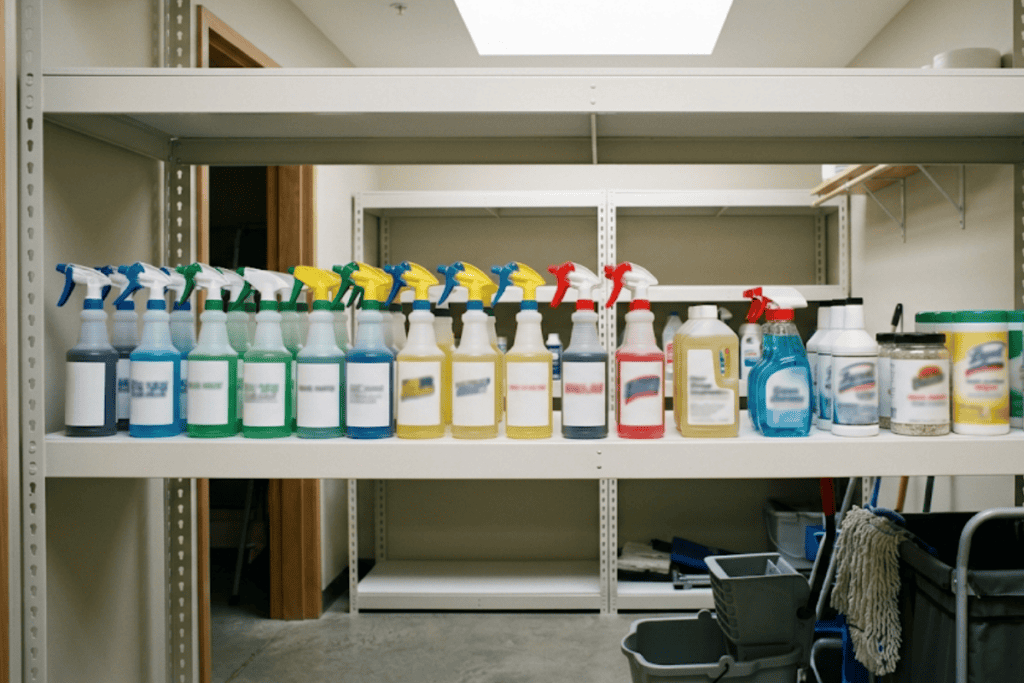
U.S. poison control centers logged a 20.4 percent jump in calls about cleaning product exposures in the first three months of 2020 compared to the same period the year before, and a large share of those calls trace back to two products that should never share a bucket. Knowing what cleaning chemicals should not be mixed together at work protects your staff from fumes that can cause real harm in a closed office or breakroom, not just a bad smell. A few combinations show up again and again in workplace incidents, and most of them involve products already sitting under the sink or in the janitorial closet.
Why Mixing Cleaning Chemicals Is More Dangerous at Work Than at Home
A single bathroom at home might get a quick blast of bleach once a week. A commercial restroom or breakroom gets cleaned daily, sometimes by more than one person on more than one shift, which raises the odds that two different products end up in the same bucket or spray bottle without anyone realizing it. OSHA’s hazard communication standard requires employers to label chemicals and train staff on the hazards of the products they use, precisely because mixing incidents are common enough in workplaces to warrant a federal rule. Enclosed offices, restrooms, and breakrooms also tend to have weaker airflow than a home bathroom with a window, so fumes concentrate faster and take longer to clear once a mixing incident happens.
What Cleaning Chemicals Should Not Be Mixed Together at Work
A short list of combinations accounts for most workplace chemical mixing incidents, and nearly all of them start with one product: bleach.
- Bleach and ammonia, found in many glass cleaners and some all-purpose cleaners, release chloramine vapors that irritate the eyes, nose, and lungs
- Bleach and acidic cleaners like vinegar or some bathroom bowl cleaners release chlorine gas
- Bleach and rubbing alcohol can produce chloroform and other irritating byproducts
- Different brands of drain cleaner used back to back can react and release heat and toxic fumes
- Hydrogen peroxide and vinegar combine to form a corrosive acid that isn’t meant for skin or lung contact
Combination Reference Table
| Combination | What It Produces | Why It Matters |
|---|---|---|
| Bleach + Ammonia | Chloramine vapors | Irritates eyes, nose, and lungs |
| Bleach + Vinegar or acidic cleaners | Chlorine gas | Can cause coughing, chest pain, breathing trouble |
| Bleach + Rubbing alcohol | Chloroform and other irritants | Causes dizziness and eye irritation |
| Different drain cleaners mixed | Heat and toxic fumes | Can cause burns or a reaction inside the pipe |
| Hydrogen peroxide + Vinegar | Peracetic acid | Corrosive to skin, eyes, and lungs |
What to Do If Chemicals Get Mixed by Accident
If a mixing incident happens, get everyone out of the room and open windows or doors to ventilate the space before anyone goes back in. Exposure to chlorine gas, one of the most common byproducts of an accidental mix, can cause coughing, watery eyes, and chest tightness within minutes. The Washington State Department of Health’s guidance on bleach hazards is direct: never combine bleach with ammonia, acids, or other cleaning products, and treat any accidental mix as a reason to leave the area immediately. If symptoms are severe or don’t clear up quickly, call Poison Control or 911 rather than trying to identify the exact reaction yourself.
The Numbers Behind the Warnings
National data backs up the caution. A CDC report on poison center calls found a 20.4 percent increase in cleaner-related exposure calls during the first months of the COVID-19 pandemic, most tied to people combining products in search of a stronger clean. Chemists point to a simple reason these reactions happen: many common cleaners contain compounds that are chemically unstable together, and this explainer on reaction chemistry breaks down why bleach in particular reacts so aggressively with both acids and ammonia-based products.
Safer Chemical Storage and Labeling Habits
- Store bleach-based and ammonia-based products on separate shelves, not side by side
- Keep every spray bottle and bucket labeled with its contents, even for daily-use dilutions
- Assign one color of microfiber cloth or mop head to bleach products and a different color to everything else
- Never combine leftover product from two different bottles to save space
- Train every shift, not just the day crew, on which products can and cannot be combined
Why Choose Sundance Office
Every cleaning product Sundance Office stocks for Broken Arrow and Tulsa-area offices comes with its own safety data sheet on file, so your facility team can check compatibility before two products ever end up on the same cart. We assort chemical orders by task instead of just by brand, which cuts down on the kind of overlapping products, three different glass cleaners, two different bleach formulas, that make mixing mistakes more likely in a busy supply closet. Our account team can also walk your facility and flag storage or labeling gaps during a free assessment, the same kind of walkthrough that catches a bleach bottle sitting next to an ammonia-based cleaner before it becomes a problem. For offices that want fewer products to keep track of, our supplies line includes dispenser programs that measure out a pre-set dilution automatically, which takes the guesswork out of how much of any one chemical ends up in a bucket.
Conclusion
The short list to remember is bleach, ammonia, acids, and rubbing alcohol, keep those apart and label everything else clearly. Most workplace chemical incidents come down to a simple storage or labeling gap rather than anyone intentionally mixing products, which means a few changes to how your supply closet is organized can prevent most of them. If you’d like more background, our cleaning terminology guide covers the basics your whole team should know, or reach out directly and we’ll put together a supply list built around your building.
Get a Free Facility Chemical Assessment. Contact Sundance Office to schedule a free walkthrough.
Frequently Asked Questions
What happens when you mix bleach and ammonia?
Combining bleach and ammonia releases chloramine vapors, which are strong lung and eye irritants even in small amounts. Symptoms can include coughing, watery eyes, and difficulty breathing, and in an enclosed space the fumes can build up quickly. The safest response is to leave the area immediately and ventilate before returning.
Can you mix bleach and vinegar?
No, combining bleach with vinegar or any acidic cleaner releases chlorine gas, which is dangerous even in low concentrations. This reaction happens quickly and can occur with other acidic products as well, including some bathroom bowl cleaners. Bleach should only be diluted with water, never with another cleaning product.
What should you never mix with hydrogen peroxide?
Hydrogen peroxide should not be mixed with vinegar, since the combination forms peracetic acid, a corrosive compound that can irritate skin, eyes, and the respiratory system. It should also be kept separate from bleach, which can create a fast, potentially hazardous reaction. Each product works fine on its own and should be applied, rinsed, and dried before switching to a different cleaner.
Is it safe to mix different brands of cleaning products?
Not necessarily. Two products with similar-sounding purposes, like two different glass cleaners or two different disinfectants, can still contain different active ingredients that react when combined. The safest approach is to check the label or safety data sheet for each product rather than assuming similar products are compatible.
What are the signs of chlorine gas exposure?
Early signs of chlorine gas exposure include coughing, watery eyes, a burning sensation in the nose and throat, and chest tightness. Symptoms usually appear within minutes of exposure. Anyone showing these signs should move to fresh air immediately, and more severe symptoms like difficulty breathing warrant emergency medical attention.